

Data Breach Response Plan, Incident Response, and Preventing Cyberattacks
- A data breach response plan and an incident response plan cover different situations, with the DBRP activating only once data exposure is confirmed.
- Reportable breaches trigger multiple notification obligations, including state breach laws, the FTC Safeguards Rule, and CISA reporting within 72 hours.
- Incident response policies require a dedicated team, clear reporting protocols, and regular drills to contain and eradicate threats effectively.
- Documentation throughout a breach response supports compliance audits, insurance claims, and any regulatory inquiry that follows.
- Prevention relies on three pillars: a dedicated cybersecurity provider, tested backups, and ongoing Security Awareness Training for employees.
Firms handle enormous volumes of sensitive financial and personal information, which makes them an attractive target for hackers, and the firms without a plan in place are usually the ones that suffer the most damage when an attack hits.
This post is for firm owners, managing partners, tax professionals, and operations leads who want to strengthen their security posture, whether you’re building a plan from scratch or updating one that already exists. In this post, we’ll cover:
- How to build a data breach response plan
- What belongs in an incident response policy
- How to prevent future attacks
Why Accounting Firms Are a Prime Target
Accountants hold a treasure trove of personally identifiable information (PII) and financial data, making them an especially attractive target for cybercriminals.
Many firm owners assume that larger firms draw the most attention from attackers, but small and mid-size firms are often at higher risk. These firms typically have fewer security defenses, less cybersecurity training, and fewer technical resources to protect themselves.
“By Q1 2026, financial services ranked as the fourth most targeted industry globally, accounting for 12% of all observed intrusion activity.” cloudrangecyber.com
It only takes one employee clicking a compromised link in a phishing email or text message for a firm to end up with a serious cybersecurity problem. Understanding why the accounting profession is a target is the first step toward building a plan that actually protects your firm.

Data Breach Response Plan vs. Incident Response Plan
The terms “data breach response” and “incident response” are often used interchangeably, but they aren’t quite the same thing.
An incident response plan covers how your firm detects and handles any security event, including ones that are contained before any data is exposed. A data breach response plan is more specific. It activates once an incident is confirmed to involve the exposure or theft of sensitive data, which is what triggers legal notification requirements, regulatory reporting, and client communication obligations.
Most firms build a data breach response plan as part of a broader incident response plan. Every breach requires an incident response, but not every incident becomes a breach.
If your firm already has a Written Information Security Plan (WISP), you’re not starting from scratch.
The FTC’s Safeguards Rule requires every WISP to include a written incident response plan, so the sections below fill in a requirement that’s likely already part of your compliance program rather than adding a new one.
If you haven’t built a WISP yet, that’s the document to start with before layering in this level of detail.

How to Build a Data Breach Response Plan
A data breach response plan (DBRP) is a written document that outlines how a firm will detect, contain, and recover from a cybersecurity incident, along with how it will communicate with employees, clients, and regulators throughout the process. A strong DBRP does more than react to an attack. It also reduces downtime, limits financial and reputational damage, and helps a firm recover with confidence. Here’s what belongs in it.
Confirm and classify the breach
Not every security incident is a data breach, so the moment one is suspected, someone on your team needs to determine whether it has crossed that line. Start by identifying what data was involved and whether it included personally identifiable information, financial account details, or other sensitive records. From there, determine how many individuals are affected and whether the information was encrypted at the time of exposure, since unencrypted data typically carries a higher legal risk.
Assign the incident a severity rating based on its scope and sensitivity, and designate who on your incident response team has the authority to make the final call on whether it qualifies as a reportable breach. This decision determines which notification requirements apply and how quickly you need to act, so document it as soon as it’s made.
Meet legal and regulatory notification requirements
Compliance requirements depend on your firm’s business type, the state where you operate, and the nature of the information you manage.
Nearly every U.S. state, along with the District of Columbia and several territories, has a security breach notification law that requires businesses to notify individuals if their personal information is exposed. Regardless of location, if personally identifiable information (PII) is compromised, your firm needs to notify the affected parties and, if applicable, the financial institutions tied to any stolen account or card numbers. The sooner you notify impacted parties, the sooner they can change passwords, monitor their accounts, and protect themselves from further harm.
Many accounting firms also fall under the FTC’s Safeguards Rule as financial institutions under the Gramm-Leach-Bliley Act. Under Section 314.4(j) of that rule, firms must notify the FTC as soon as possible, and no later than 30 days after discovery, of a breach involving the unauthorized acquisition of at least 500 consumers’ unencrypted information. (Source: FTC.gov, Standards for Safeguarding Customer Information)
Report to CISA within 72 hours
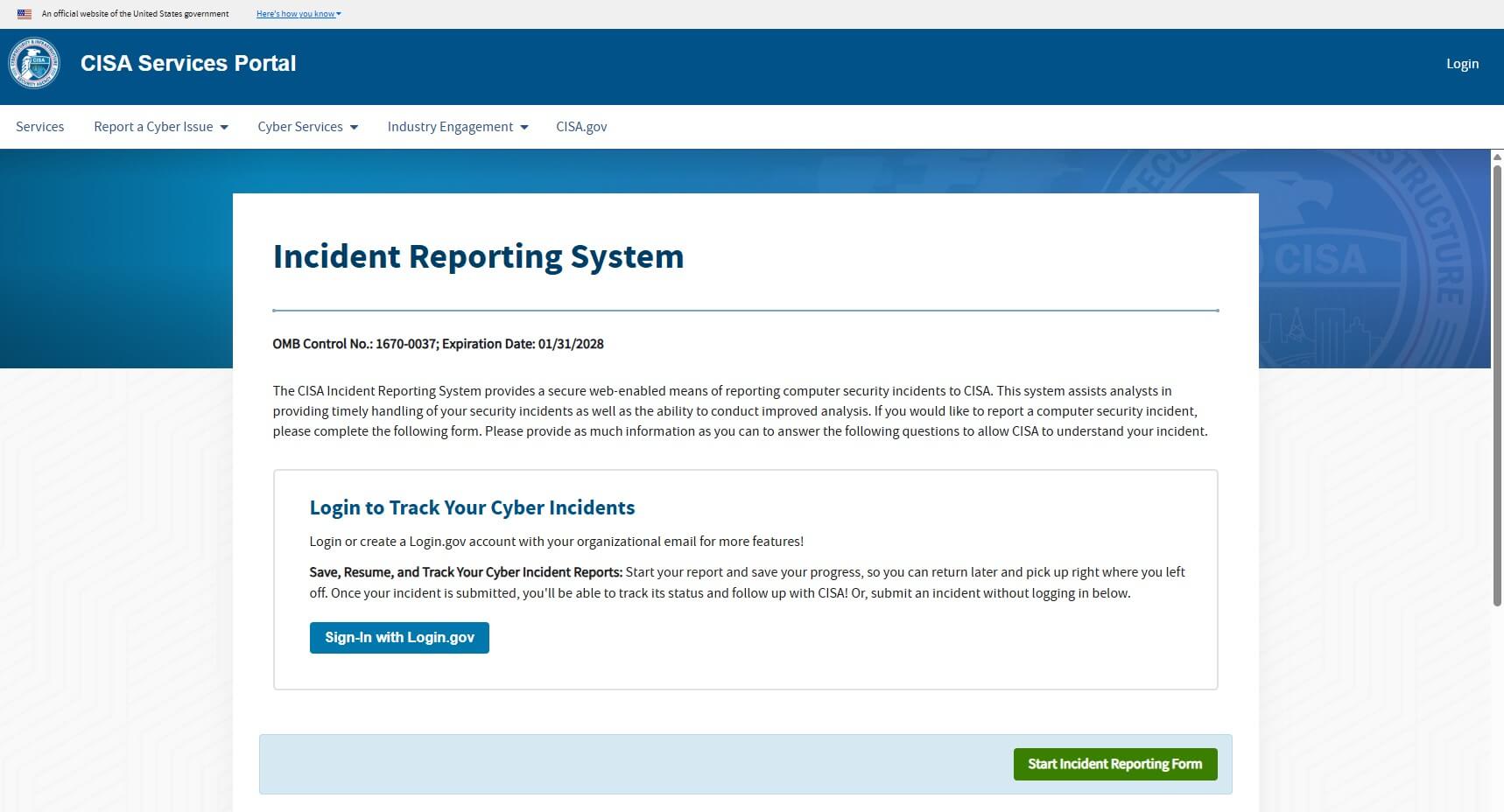
If an incident occurs, notify the Cybersecurity and Infrastructure Security Agency (CISA) within 72 hours by emailing report@cisa.gov or calling 888.282.0870. Visit cisa.gov/report for full reporting guidelines.
When you report an incident to CISA, be ready to share:
- Incident date and time
- Incident location
- Observed activity
- A detailed narrative of the event
- The number of people or systems affected
- Your company name
- Point of contact details
- Severity of the event
- Critical infrastructure sector
- Any other informed parties
Build a communication plan
Communicating that a breach occurred is never comfortable, but it’s a mandatory part of your response. Build both an internal and an external communication strategy well before you need one.
“Section 314.4(j) of the Safeguards Rule requires financial institutions to notify the FTC as soon as possible–and no later than 30 days after discovery–of a “notification event.” For purposes of the Rule, a “notification event” is a security breach involving the unauthorized acquisition of at least 500 consumers’ unencrypted information.” FTC.gov
Decide in advance how you’ll notify employees, clients, partners, and regulatory bodies, and keep a draft notice ready and stored somewhere secure in case you need it. Once a breach is confirmed, inform any clients or partners whose information may have been compromised, following the legal requirements above. Maintaining transparency throughout the process helps your firm preserve trust with everyone affected.
Coordinate with legal counsel
Because notification requirements vary by state, industry, and the type of data involved, it’s worth consulting legal counsel who can confirm exactly which obligations apply to your firm and help you avoid missing a deadline or a required recipient.
Legal counsel can also review your notification letters before they go out, coordinate with your cyber insurance carrier on coverage and claims, and advise on liability if a client or regulator questions how the incident was handled. Loop counsel in early, ideally as part of your incident response team rather than after the notifications are already drafted, so their guidance shapes the response instead of correcting it after the fact.
Document everything
Every step of your response should be recorded as it happens, not reconstructed afterward. Keep a timeline noting when the incident was discovered, when each subsequent action was taken, and who took it. Log every notification you send, including the date, the recipient, and the method, along with a copy of the notice itself.
This record serves three purposes:
- It supports any compliance audit tied to your notification obligations
- It gives your cyber insurance provider what they need to process a claim
- It protects your firm if a regulator or client later asks how the incident was handled
Store these records somewhere secure and separate from the systems that were affected, so they survive even if the incident is severe.
What Belongs in an Incident Response Policy
While a data breach response plan governs what happens once data is exposed, your incident response policy needs to cover the full lifecycle of any security event, breach or not. Here are the seven pieces it should include:
1. Build your incident response team
Every incident response policy starts with people. Your incident response team (IRT) is the group responsible for implementing cybersecurity measures and responding the moment an incident occurs.
Depending on the size of your firm, your IRT might include firm owners, internal IT staff, key vendors, and outside cybersecurity specialists. Many firms, especially smaller ones, choose to bring in an outside agency rather than build an internal team from scratch. This is often more affordable than firm owners expect, and it gives the firm access to expertise it may not have in-house.
Your IRT should stay current on cybersecurity best practices and Security Awareness Training, and its members should genuinely care about keeping the rest of the firm secure. Just as important, the team needs to be ready to respond immediately, regardless of the time of day.
2. Set up detection and monitoring
Knowing about a threat is only useful if you know about it quickly. The faster your firm discovers an incident, the easier the cleanup will be. Put real-time monitoring systems at the top of your plan so suspicious activity gets flagged before it spreads.
A cyberattack rarely announces itself. Train your team to watch for warning signs like these:
- A browser’s homepage changes without input.
- A computer starts crashing or running unusually slowly.
- Unfamiliar programs launch on startup or when connecting to the internet.
- Email, passwords, or other account settings change without the user’s knowledge.
- Emails are sent from an account that the owner didn’t write.
- Posts or friend requests appear on an account that the owner didn’t create.
3. Define reporting protocols
Make sure every employee knows exactly where to report suspicious activity and what to do the moment they suspect an incident.
Share these first two steps with your team as a starting point:
- Notify. Contact your IT team, whether internal or outsourced, before touching anything else on the affected device. A well-equipped provider often has monitoring in place and may already be aware of the issue.
- Identify. Work with your provider to determine what happened. Did someone open a suspicious attachment, click a link in a text message, or fall for a weak or reused password? Your provider can help trace how the attacker gained access.
From there, the team moves into containment, which is covered next.
4. Contain the threat
Once an incident is identified, contain it by disconnecting the affected system from the internet and shutting down the device. Employees should wait for direction from IT before using the device again, so damage doesn’t spread to other systems on the network.
Where possible, isolate the incident further by segmenting the affected network from the rest of your infrastructure and disabling or resetting any credentials that may have been compromised. Avoid wiping or reimaging the device right away. Preserving it in its compromised state gives your IT team or an outside investigator the evidence they need to determine how the attacker gained access, which informs both the eradication step that follows and any report you file with CISA or your insurer.
5. Eradicate and recover
Once the incident is contained, the next step is eradicating the threat itself. Remove any malware or unauthorized access points from affected systems, reset all compromised credentials, and patch the vulnerability that allowed the attacker in. Confirm the threat is fully gone, not just dormant, before reconnecting any system to the network.
From there, assess the damage. Determine whether other systems were affected, whether any data was lost or deleted, and whether it’s possible to restore it from backup.
A backup and recovery plan is one of the most important parts of this step. If your firm loses data, whether from theft, corruption, or a ransomware attack, a clean and tested backup ensures you have an uncorrupted copy ready to restore quickly. Look for solutions built for the applications your firm depends on, and confirm your backups are tested regularly, not just scheduled.
6. Conduct a post-incident review
After any incident, your team should evaluate what happened, how quickly it was addressed, and what could prevent it from happening again. Revisit your plan regularly and align it with current industry standards so it stays effective as cyberthreats continue to evolve.
7. Schedule regular training and drills
Regular training and drills help keep the team prepared before an actual incident occurs. Run tabletop exercises at least quarterly, walking your incident response team through a simulated scenario such as a ransomware attack or a compromised employee account, so everyone understands their role before a real incident forces them to improvise.
Update your training content as new threats emerge
A drill that only covers phishing won’t prepare your team for a vendor compromise or a stolen device, so vary the scenarios you run and incorporate any lessons learned from real incidents at your firm or elsewhere in the accounting profession.
How to Prevent Future Attacks
Preventing an attack is far less costly than recovering from one. Three practices make the biggest difference for accounting firms:
1. Work with a cybersecurity provider
A dedicated cybersecurity provider can offer around-the-clock device monitoring, continuous intrusion monitoring, multilayered firewalls, multiple layers of malware detection, multifactor authentication, and proactive support so threats are caught before they cause damage.
2. Maintain a strong backup plan
Backups ensure that if data is accidentally lost or deliberately encrypted in a ransomware attack, your firm can restore it without paying a ransom. Choose a backup solution that covers every application critical to your business, and confirm restoration is fast and reliable. Learn how to build a strong backup and recovery plan, here.
3. Invest in cybersecurity training
Employees are usually the first line of defense against a cyberattack, and security awareness training helps them recognize threats before they cause harm. Look for ongoing training rather than a one-time course, simulated phishing exercises to reinforce what employees learn, and full management by an experienced provider so training doesn’t become one more task on your team’s plate.
Prepare Today; Recovery Quickly Tomorrow
A data breach response plan won’t stop every attack, but it gives your firm a clear, tested path forward when one occurs. Building your incident response team, documenting your communication and legal obligations, and training your staff now means your firm can respond with confidence instead of scrambling in the moment. The firms that prepare today are the ones that recover fastest tomorrow.

FAQs
A data breach response plan (DBRP) is a written document outlining how a firm detects, contains, and recovers from a cybersecurity incident. It also outlines how the firm communicates with employees, clients, and regulators, and it helps limit financial and reputational damage after an attack.
An incident response team typically includes firm owners, internal IT staff, key vendors, and outside cybersecurity specialists. Many small and mid-size firms choose to work with an outside cybersecurity provider instead of building an internal team, which gives them access to expertise they may not have in house.
Notify your IT team, whether internal or outsourced, before doing anything else on the affected device. From there, work with your provider to identify how the incident happened, contain it by disconnecting affected systems, and assess the damage once the system has been repaired.
Organizations are encouraged to report unusual cyberactivity or a confirmed incident to CISA within 72 hours. Reports can be sent to report@cisa.gov or by calling 888.282.0870, and full guidelines are available at cisa.gov/report.
A data breach response plan should be reviewed after every incident and on a regular schedule, even when no incident has occurred. Firms should align their plan with current industry standards so it accounts for new cyberthreats as they emerge.
