The Top 7 Cybersecurity Threats Facing Accounting Firms in 2026
Key Takeaways
- AI-driven phishing and deepfakes can now mimic the voices, faces, and writing styles of people your team trusts, making old verification habits unreliable.
- Ransomware-as-a-service has turned attacks into a subscription business, raising both the volume and the severity of incidents.
- Remote and hybrid work, weak encryption, and unvetted vendors remain some of the easiest ways into a firm’s systems.
- Compliance expectations keep tightening, and firms without a current written information security plan (WISP) face real penalties and lost client trust.
- A layered defense built on multifactor authentication, ongoing Security Awareness Training, secure cloud hosting, and tested backups sharply reduces your risk.
Accounting firms hold exactly what cybercriminals are after:
Social Security numbers, bank account details, tax returns, and years of confidential client records.
That concentration of sensitive financial data makes cybersecurity for accounting firms a frontline business priority, not a back-office IT task. And the risk is climbing.
Attackers now use artificial intelligence to scale convincing scams, rent ready-made ransomware, and exploit the gaps created by distributed teams.
The result is a threat environment that looks sharply different from even two years ago.
In this post, we break down the seven most pressing cybersecurity threats accounting firms face in 2026, explain why each one matters to your practice, and lay out a practical plan to defend your firm, your clients, and your reputation.
The Evolving Threat Landscape
There’s no other way to say it: threats have evolved. And the tools attackers use have changed faster than most firms’ defenses.
Artificial intelligence lets criminals produce convincing scams at scale, ransomware is now something they rent rather than build, and cloud-connected teams widen the surface they can target.
Here are the seven threats demanding your attention in 2026:
1. AI-driven phishing
Phishing is still the most common way attackers get in, but it no longer looks like the clumsy, typo-filled email of years past. Modern campaigns use spoofed addresses that appear legitimate, manufacture urgency, and tailor their messaging to accounting professionals during the busiest points of the year. They also branch beyond email into SMS phishing (smishing) and voice phishing (vishing).
What raises the stakes in 2026 is artificial intelligence.
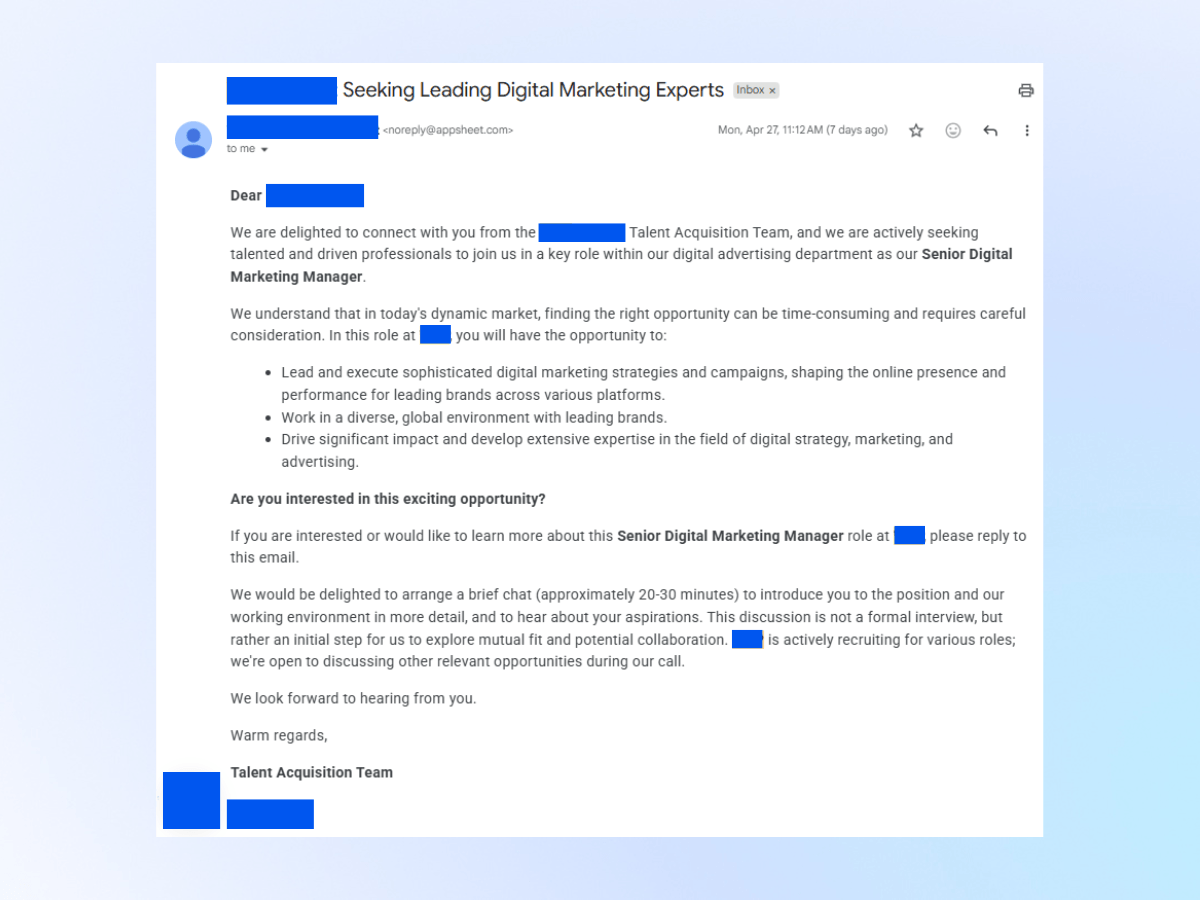
Attackers now generate flawless, personalized messages at scale (see example below) and use deepfake audio and video to impersonate partners, clients, and vendors on live calls. A request that sounds exactly like your managing partner asking for an urgent wire transfer is far harder to dismiss, and a single convincing message can open the door to fraud or ransomware.
2. Ransomware-as-a-service
Ransomware used to require real technical skill. Now it’s sold as a service. Under the ransomware-as-a-service (RaaS) model, developers build the malware and lease it to affiliates who carry out the attacks, splitting the proceeds. That arrangement has lowered the barrier to entry and pushed both the number and sophistication of attacks higher.
The damage has grown too. Newer strains don’t just encrypt your files; they exfiltrate sensitive client data first and threaten to leak it, and some are designed to destroy systems outright. Most attacks still begin with a phishing message or a stolen credential.
For a firm in the middle of tax season, even a short period of locked-up systems can be devastating, and paying a ransom never guarantees you get your data back intact.
3. Unsecured remote and hybrid workspaces
Many firms moved to remote and hybrid work without rebuilding their security to match. Home networks running default router passwords, personal devices without proper controls, and public Wi-Fi connections each create a new way in.
When client data lives across dozens of locations and devices, the attack surface expands, and consistent policy enforcement gets harder. That combination is one of the most common sources of exposure for firms today, and it directly affects your ability to stay compliant.
4. Weak or inconsistent encryption
Sensitive financial data is most vulnerable when it moves or sits unprotected. Plenty of firms still send client information over unencrypted email, skip secure client portals, or store data on devices and backups that aren’t encrypted.
Without encryption in transit and at rest, anything intercepted or stolen is immediately readable. For a firm trusted with tax records and financial statements, that’s a direct path to a reportable breach.
5. Third-party and vendor risk
Your security is only as strong as your weakest vendor. Software providers with poor security practices, cloud platforms lacking proper compliance certifications, and weak data-handling agreements all extend risk into your firm, often without your team realizing it.
When a vendor with access to your systems is breached, your clients and your regulators will still treat it as your breach. Yet vendor security is one of the most frequently overlooked parts of a firm’s defenses.
6. Inconsistent security awareness training
Your people are either your strongest line of defense or your weakest link, and training is what decides which. One-and-done onboarding sessions, no simulated phishing tests, and no way to measure what employees retain all leave the door open.
Most successful attacks still rely on a single human action, such as clicking a malicious link or approving a fraudulent request. Without regular, role-specific training that keeps pace with new tactics, even a well-equipped firm stays exposed.
7. Intensifying compliance and regulatory pressure
Every firm handling financial and personal client data has to meet a growing set of requirements, including the FTC Safeguards Rule and the IRS Security Six. As attacks evolve, regulators keep expanding what they expect, and the written information security plan (WISP) that satisfied an examiner a few years ago may no longer be enough.
Falling behind carries real consequences: penalties, failed audits, and the loss of client confidence that’s hard to win back.

How to Defend Your Firm
No single product eliminates cyber risk, but a layered approach makes your firm a much harder target. The measures below give you a practical starting point.
1. Turn on MFA for every application
Turn on multifactor authentication (MFA) for every application that touches client data, so a stolen password alone can’t grant access.
2. Run ongoing cybersecurity training with simulated phishing
Run ongoing Security Awareness Training with simulated phishing, and tailor it to the specific risks each role faces rather than relying on a single annual session.
3. Verify unusual or urgent requests
Verify any unusual or urgent request, especially a financial one, through a second channel, such as a live phone or video call, which is your best defense against deepfakes.
4. Move to managed cloud hosting
Move to secure, managed cloud hosting with 24/7 monitoring instead of keeping client data on local machines and home devices. Rightworks Total Security pairs managed cloud hosting with protections built for the accounting profession, keeping your data monitored around the clock.
5. Encrypt data
Encrypt data in transit and at rest, and exchange documents through a secure client portal or document management solution rather than email attachments.
6. Vet every vendor
Vet every vendor before you grant access, setting minimum requirements for authentication, encryption, audits, and breach notification, and review those practices regularly.
7. Maintain your WISP
Build and maintain a current WISP, audit it against frameworks like the FTC Safeguards Rule and the IRS Security Six, and use a free WISP analyzer to find the gaps.
8. Implement and test your backup and recovery plans
Implement a tested backup and recovery plan so you can restore operations quickly if an attack gets through.
There’s no such thing as zero risk, but firms that combine the right technology with a strong security culture dramatically reduce their exposure. Start by understanding where you stand today, then close the gaps that put your clients’ data and your firm’s reputation at risk.
Self-Assess Your Firm’s Security Risk
Ready to identify your firm’s specific risks? Take the one-minute security risk assessment today.